
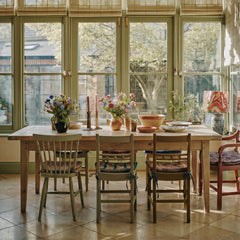
How long a properly made dining table should last
We've got a table in the workshop that one of the lads' grandfathers made in 1962. It has been used every day since. The top has gone the colour of warm honey, has half a dozen small scorches from candles and cooking pans, and a soft patina along the edge where forty thousand sleeves have rested. Every joint is still tight. The legs sit dead flat. You could drop another sixty years onto it and it would not flinch.
A properly made dining table should last like this — comfortably long enough to outlive whoever bought it, and to be passed on. Three generations is not unusual. Four is achievable. The reason most contemporary tables don't get anywhere near this is not because the materials don't allow it. It's because the design didn't intend it.
A dining table built to last is built around a small set of decisions. Solid timber, not veneer. Generous thickness — we use 50mm throughout. Proper mechanical joints, not flat-pack hardware. Breadboard ends to control movement. A finish that can be reapplied or refreshed rather than replaced. A base whose joints can be re-tightened or re-cut by any decent joiner forty years from now. (Our piece on what makes a dining table feel sturdy and well made covers this in more detail.)
Just as importantly, it is built around the assumption that it will be used. An heirloom-grade table is not a museum object. It is a working piece of furniture. It will be marked. The wax finish will mellow. The corners will soften where children have leaned on them. None of this is damage. All of it is the table becoming itself.
What you should not see, even after thirty years, is wobble, joint failure, surface delamination, or a top that has bowed or split. Those are signs the table was not made to last in the first place — and no amount of careful living will save it. (See why some dining tables start to wobble after a few months and solid wood versus veneer — which is actually better.)
A good table is one of the longest commitments most people will make to a piece of furniture. Made properly, it returns the favour by quietly outlasting almost everything else in the house.