
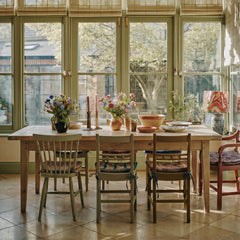
The comfort problem nobody mentions when buying a dining table
We've said this before, but it bears repeating. Almost everyone who buys a dining table thinks about how it looks before they think about how it sits — and very few people think about how it sits at all. That is largely because it isn't easy to test. You can't really know how a table feels until you've sat at it for a long, slow dinner with eight people round it, plates down, candlesticks lit, the wine flowing. By the time you've discovered there's a problem, the table is yours.
The comfort problem is usually one of three things, all of them invisible until you're seated.
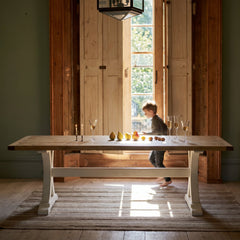
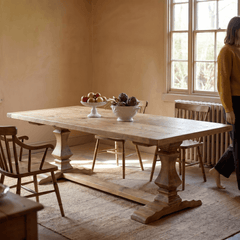
The first is legroom under the top. Aprons that hang too deep, stretchers that run between the legs, pedestals that swell out at the floor — all of these will catch the legs of the people sitting around the table. (Worth reading why pedestals, stretchers and aprons get in everyone's way on this.)
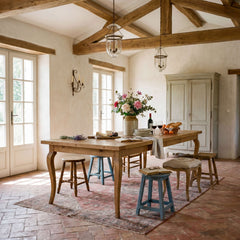
The second is clearance at the edges. The table is the right size on paper, but once chairs are in, there is no room to pass behind them. People stand up every time someone needs to leave the table. The room never quite settles. (Our piece on how much clearance you actually need around a dining table covers this in a bit more detail.)
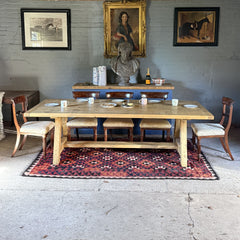
The third is width across the top. A narrow table — anything under 90cm — looks fine when empty but cannot hold a meal once plates, glasses and serving dishes are down. People end up shuffling things sideways to make room. A generous table, around 100 to 110cm, gives you a calm strip down the middle for candlesticks, flowers, a board of cheese, the things that make a table feel laid up rather than crowded.
None of this is the table's fault. It is the fault of design briefs that prioritised photographable looks over actual evening-long use. A table that is going to be in your house for thirty years should be sat at first and looked at second.
If you'd like one designed the right way round, do get in touch.