
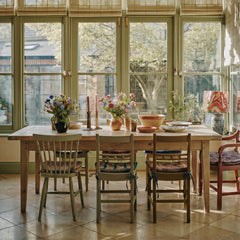
Why "standard sizes" never quite work in period homes
There is a moment, somewhere around the second viewing of a Victorian terrace or a Georgian cottage, when you realise that none of the rooms are quite the shape they ought to be. There's a chimney breast where the wall should be. The window is in a slightly inconvenient place. There is a curious diagonal corner that nobody can explain. The room is beautiful — but it is not, in any meaningful sense, standard.
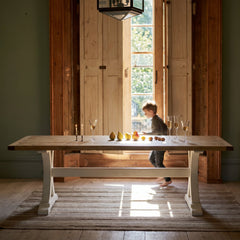
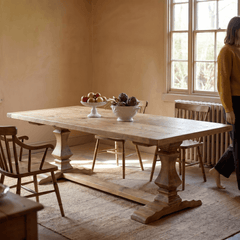
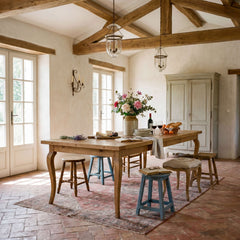
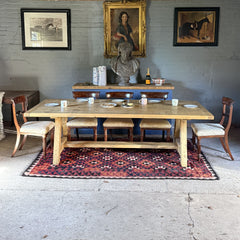
This becomes a small, ongoing problem the moment you try to furnish it. Almost all dining tables sold off the shelf are designed to a pre-imagined dining room: a clean rectangle, equal on all sides, with no architectural quirks of any kind. The 180cm table, the 200cm table, the 220cm — they exist because they fit a spreadsheet, not because they fit your room. Drop one into a real period dining room and you will almost always find that it is six inches too long, or its width fights the chimney breast, or the leg placement falls awkwardly relative to the window.
The result is one of two compromises. Either you live with a table that sits a little oddly in the room, and quietly resent it for years; or you give up something else — your sideboard, your second armchair, the rug you'd planned around — to make the table work. Neither is much of a result.
Old houses were built to proportions that vary wildly room to room, and the furniture that suits them best tends to be furniture made to those same proportions rather than against them. We spend a great deal of our time making tables to dimensions that nobody else lists — slightly narrower than usual to honour a cramped passage, longer than usual to fill a knocked-through scullery, set on a base that pulls inwards to clear a chimney return.
It isn't that bespoke is fancier. It's that bespoke is honest about the room.
If you live in a house that was built before any standardised anything, the real reason your table doesn't fit your room and why awkward and characterful rooms need bespoke tables are probably worth a read. Or you can simply send us a sketch on the back of an envelope.