
Why round tables feel more sociable than rectangular ones
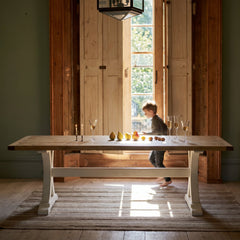
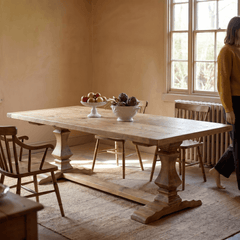
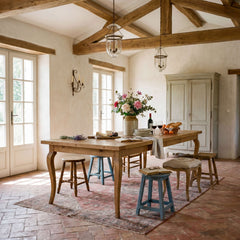
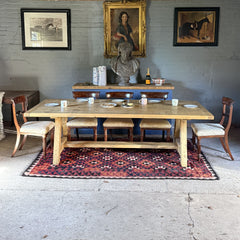
We make a lot of rectangular tables. They suit most rooms; they are the easy choice for dinner parties; they are what most people picture when they picture a table. But every now and again we make a round one, and we are reminded of just how different a round table feels.
There is no head of the table. That is the first thing. A rectangular table inevitably has a hierarchy — a host's end, a guest's end, a parent's chair, a child's chair, the seat your father-in-law always takes without asking. A round table dissolves all of that. Everyone is equidistant from everyone else. The conversation moves freely round the table rather than running along it in two parallel lines that occasionally meet.
There is also a curious physical effect. People naturally lean in over a round table in a way they don't over a long one. The edge curves towards them. Plates and serving dishes are within reach without anyone having to pass anything down. The space encourages a kind of relaxed, voices-overlapping sort of evening — the sort that ends with candles burned low, half-empty wine glasses, and somebody refusing to let anyone clear the plates yet.
The practical considerations are different too. A round table for six wants a diameter of around 150cm; for eight, closer to 180cm. Beyond that, the centre of the table starts to become unreachable, which is a problem when the gravy boat lives in the middle. We tend to suggest that anything seating more than eight is better as a long, generous rectangle.
We make our round tables on a single architectural base — heavy, grounded, faintly French — with a beautifully thick top sitting on it. The whole piece feels low and settled, the way old kitchen tables in old farmhouses do. (For the differences in how the top itself sits, why a 50mm-thick top changes how a table feels is worth a read.)
If you have a square room, a kitchen with a slightly awkward extension, or simply prefer your dinners egalitarian, a round table is often the most quietly civilised choice you can make. (Why awkward and characterful rooms need bespoke tables covers the broader question.)