
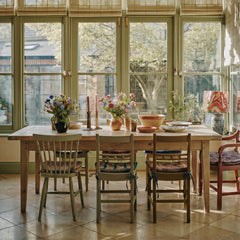
Why a handmade table feels different the moment you sit down
It is a small thing to describe, and slightly larger to experience. You sit down at a properly made dining table and something in the room feels a little more settled than it did before.
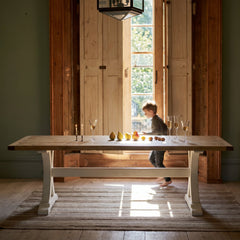
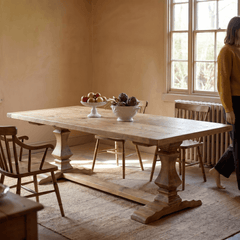
It begins with weight. A handmade table in solid timber, with a 50mm top, simply has more presence than a mass-produced piece. The first time you put your hands flat on it, the surface absorbs the gesture. Set a glass down and it lands; it doesn't ring. Lean an elbow on the corner and the corner does not give. The whole piece sits as though it has always been there, rather than as though it has just been delivered.
There's a tactile thing too. Solid timber, finished with a soft wax rather than a sprayed lacquer, has an honest surface. It is smooth where it should be smooth and has the faint texture of grain where the grain runs through it. Run a hand across it, and your hand reads wood — not the slightly plasticky uniform sheen of a synthetic finish. The Lumbr finishes are wax-based with a characterful patin stain — Ecru for a very light tone, Fawn for something a touch warmer, Tan for the proper natural-brown timber look — and they all mellow rather beautifully over the years.
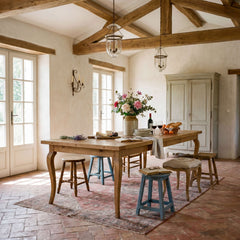
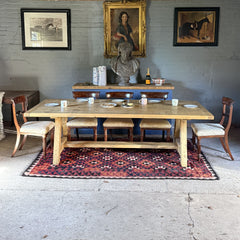
Sitting down feels different too. The legs are set inboard, so the chairs slide cleanly under. There is no apron catching at the thighs, no stretcher in the way of the shins. Knees go where they ought to. You sit at the table rather than at arm's length from it. (More on the engineering of this in why the end seats on most tables are basically useless and why pedestals, stretchers and aprons get in everyone's way.)
We've often thought that the test of a table is the third hour of a long evening — when the wine has been opened, the candles are low, the conversation has slowed. A well-made table is the kind of piece you don't notice during that third hour, because it is doing its job perfectly. By the way, if you're enjoying these notes and would like to keep an eye on what we're up to in the workshop, we send rather a lot of letters — new pieces, current commissions, the occasional photograph in a low Sunday light. [ your email ] [ subscribe ] — anyway, returning to it. A mass-produced table is the kind you start to notice at that third hour: the chair catching, the elbow on the apron, the slight rock when somebody leans.
The handmade difference is genuinely small, table by table, but it accumulates over the years into something rather large. (See solid wood versus veneer — which is actually better.)
It is the difference between a piece of furniture you live with and a piece you live around.