
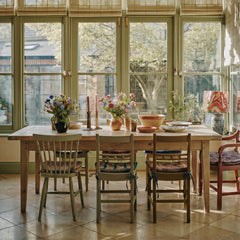
The real reason your table doesn't fit your room
There is a particular kind of frustration that creeps in a few months after a new dining table arrives. The piece itself is fine. The wood is decent, the colour is right, it photographs nicely. But every time you sit at it, something is faintly wrong with the room. The chairs catch the rug. The end seats are uncomfortable. There is a corner of the table that always feels like it wants to be somewhere else.
The real reason is almost never the table. It is the assumption that came with it.
Mass-produced furniture is built around a set of average rooms. Average ceiling heights, average window placements, average widths between walls. The piece is then designed to fit most of those average rooms acceptably. Acceptably is not the same as well. Acceptably is the lowest common denominator of fit, and lowest-common-denominator design is what you end up living with.
Your room, almost certainly, is not average. The walls don't run perfectly parallel. The fireplace eats into the floor plan on one side. The window sits a hand's width off centre. Your kitchen-diner has a peninsula that creates a dog-leg around the table. The room has been lived in, extended, replastered, painted, and lived in again. It has character. It has, in furniture-buying terms, opinions.
A standard-size table sits in such a room the way an ill-fitting suit sits on a body. Technically wearable, generally fine, but never quite the thing. There's an inch of fabric pulling somewhere it shouldn't. The lapel sits oddly. You can't tell what's wrong, but you can tell something is.
The fix isn't a different standard size. It's a table whose dimensions begin with your room, not with a warehouse. (Which, naturally, is what we make. We've written more about why "standard sizes" never quite work in period homes, and about why awkward and characterful rooms need bespoke tables, if either of those is the conversation you're having.)
A table should be cut to the room. Then the room can stop apologising for itself.