
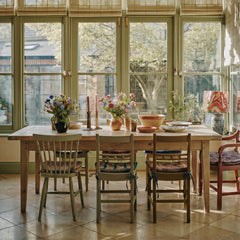
Why kiln-dried timber matters in homes with underfloor heating
Most modern English homes are not, in the meteorological sense, very English indoors any more. The damp Edwardian draught has been replaced with central heating, double glazing, draught-proofed doors, and — increasingly — underfloor heating that runs at low temperature most of the year. This is wonderful for living in. It is rather difficult for furniture.
Timber is a hygroscopic material. It absorbs and releases moisture from the air around it, swelling slightly in damp conditions and shrinking slightly in dry. In a traditional unheated room, the seasonal range is fairly small. In a modern underfloor-heated kitchen-diner, the air can be markedly drier than the timber expects, and timber that arrived at, say, 12% moisture content will keep losing moisture in the warm, dry conditions until it stabilises at around 7 or 8%.
That loss of moisture causes movement. The boards shrink very slightly across the grain. Joints open. Tops can cup or, in extreme cases, split. This is the unhappy life cycle of a great many off-the-shelf tables, particularly those imported from kilns in cooler, damper climates and dropped straight into a dry English home. The piece looked perfect in the showroom. A year later, there's a hairline crack along one of the joints.
The fix is to dry the timber further before it ever leaves the workshop. We kiln-dry our boards to below 5% moisture content — meaningfully drier than they will ever encounter in a modern home, even one with underfloor heating cranked up through January. By the time the table reaches you, it has nothing left to give. It will not shrink, cup or split, because there is no moisture left to lose.
We also build with breadboard ends across the short edges of the top, which mechanically resist any residual cross-grain movement and keep the top dead flat for the long run. (More on the engineering in what makes a dining table feel sturdy and well made, and on the failure modes when this is done badly in why some dining tables start to wobble after a few months.)
The short version: a table for a modern home needs to have been dried for a modern home. Most aren't. Ours are.